


LifeStyle Renovations Blog
Summer Home Organization Tips for a More Functional Home in 2026


Summer brings longer days, warmer weather, outdoor projects, family activities, vacations, sports equipment, gardening supplies, and a steady flow of people moving in and out of the house. It can be one of the most enjoyable times of year, but it can also reveal every weak point in your home’s storage and layout.
When shoes collect at the entrance, patio accessories take over the garage, children’s gear spreads across the mudroom, and the basement becomes the default destination for everything without a permanent home, the problem is rarely a lack of effort. More often, the home does not have an organization system that matches the way the household actually lives.
That makes summer an ideal time to look beyond a quick cleaning session. A thoughtful summer reset can help you decide what should stay, where it should be stored, which areas are no longer functioning properly, and whether a renovation could solve a recurring problem more effectively than another collection of temporary bins.
The previous version of this guide focused on decluttering closets, kitchens, offices, garages, bathrooms, living rooms, and basements. Those areas remain important, but organization in 2026 is becoming more intentional. Homeowners are increasingly interested in integrated storage, hardworking mudrooms, flexible rooms, concealed cabinetry, digital inventories, and systems that reduce the amount of daily maintenance required. Current design coverage also points to a move away from harsh, all-or-nothing decluttering and toward thoughtful ownership, adaptable storage, and rooms designed around real routines.
The goal is not to create a house that looks untouched. It is to create a home that is easier to live in throughout summer and the rest of the year.
Why Is Summer a Good Time to Organize Your Home?
Summer creates a practical opportunity to examine how your home works during an active season. You may be entertaining more often, spending time on the deck, travelling, gardening, completing home projects, or managing children who are home from school. These activities bring different items into circulation and make crowded areas much more noticeable.
A coat closet that seemed adequate in winter may become awkward when it also has to hold hats, sunscreen, reusable shopping bags, sports equipment, dog-walking supplies, and picnic gear. A garage may technically contain everything you own while still being too crowded to park a vehicle or reach the lawn mower. A kitchen may have plenty of cabinets but lack an efficient place for water bottles, barbecue tools, entertaining pieces, and bulk groceries.
Summer organization gives you a chance to identify these friction points while they are happening. Instead of guessing what your family needs, you can observe where items are dropped, which cupboards overflow, what gets lost, and which spaces require constant tidying.
The season is also useful for projects that involve opening doors, moving items outside temporarily, washing storage areas, or sorting bulky possessions. Calgary homeowners can use a dry day to empty part of a garage, shed, basement storage room, or deck box without trying to sort everything inside the house.
How Should You Plan a Whole-Home Summer Reset?
Begin with a walk-through rather than immediately emptying a closet. Move through the house and note the areas that cause the most frustration. Look for surfaces that attract piles, doors that cannot open fully, rooms that are difficult to clean, and items that migrate because they do not have an assigned location.
It helps to divide your observations into three categories.
The first category is clutter that can be solved by removing unnecessary belongings. The second is disorganization that can be improved with better placement, shelving, labels, drawers, hooks, or containers. The third is a structural problem that may require cabinetry, a different layout, a finished room, a larger closet, or a renovation.
This distinction prevents you from purchasing storage products for possessions you do not need. It also prevents you from blaming yourself for a room that was never designed to perform its current job.
Choose one high-impact area first. Completing a mudroom, pantry, bathroom vanity, or section of the garage will create more momentum than opening several rooms at once. Set a clear finish line, such as making room for both vehicles, creating one shelf for each child, or clearing the kitchen island and keeping it clear.
How Can You Declutter Without Making a Bigger Mess?
A common mistake is removing everything from a large room before deciding how the sorting process will work. This can turn a manageable project into a house-wide disruption.
Work in sections small enough to finish in one session. In a kitchen, that may mean one bank of cabinets. In a garage, it may mean one wall. In a basement, it may mean a single shelving unit. Complete the decisions, cleaning, and replacement of items before moving to the next section.
Use four practical destinations: keep here, relocate elsewhere in the home, leave the home, and decide later. The “decide later” category should be limited to one container with a review date. Without a boundary, it can become a new form of permanent storage.
When evaluating an item, consider whether it is used, needed, difficult to replace, or meaningfully valued. Also consider the cost of keeping it. Possessions require physical space, cleaning, maintenance, and attention. An item that may be useful someday can still create a daily inconvenience if it blocks access to things used every week.
Avoid setting unrealistic rules, such as discarding everything that has not been used in twelve months. Seasonal equipment, formal clothing, tools, keepsakes, emergency supplies, and specialty kitchen items may be worth keeping even when used infrequently. The better question is whether the item deserves the amount and quality of space it occupies.
How Can You Create a More Functional Entry or Mudroom?
The entrance is one of the most important areas to organize because it controls what travels into the rest of the home. During summer, it may need to manage sandals, running shoes, hats, sunglasses, sunscreen, pet supplies, sports bags, light jackets, reusable bags, and items waiting to be returned.
Start by removing winter gear that is no longer needed every day. Clean and repair it before storing it so that it is ready when colder weather returns. Use labelled bins or garment bags and avoid placing seasonal clothing in locations needed for current items.
Next, assign storage by action rather than by product. Create a leaving-the-house zone for keys, wallets, sunglasses, and bags. Create a personal section for each family member. Add a low basket for shoes, hooks at usable heights, and a tray for small items that would otherwise spread across a counter.
A bench with drawers, tall cabinets, cubbies, and closed shoe storage can dramatically improve a busy entrance. Closed cabinetry helps calm the visual appearance of the room, while a few open hooks make it easy to manage frequently used items. The balance matters: too much open storage looks cluttered, while too much closed storage can make quick routines inconvenient.
For households using the garage as the main entrance, consider whether the garage and mudroom should function as one continuous arrival zone. A renovation can add durable flooring, better lighting, storage lockers, a utility sink, charging space, and cabinetry for seasonal accessories.
How Can You Organize the Garage for Summer Activities?
The garage often has to support several roles at once: parking, tool storage, sports equipment, gardening, recycling, automotive supplies, bicycles, camping, and household overflow. Organizing it successfully requires clearly defined zones.
Begin with the floor. Decide what absolutely must remain on it and move suitable items to the walls or ceiling. Bicycles, ladders, hoses, folding chairs, and some sports equipment can often be stored vertically. Frequently used tools should remain between waist and eye level, while lighter seasonal items can be stored higher.
Create separate zones for gardening, vehicle care, tools, sports, camping, and household supplies. Keep categories together even when there is unused space elsewhere. Scattered storage makes it difficult to see what you own and can lead to unnecessary duplicate purchases.
Use sturdy shelves sized for the containers they will hold. Randomly sized bins can waste vertical space and create unstable stacks. Clear bins are useful when visibility matters, while matching opaque bins can work well when each one has a large label and an inventory.
Keep safety in mind while decluttering. Paint, solvents, batteries, cleaners, automotive fluids, fluorescent bulbs, and other household hazardous waste should not be placed in Calgary’s blue, green, or black carts. The City of Calgary currently provides free residential drop-off through its Eco Centres and designated household hazardous waste depots, with different locations accepting different materials.
If the garage still cannot perform its required functions after unnecessary items are removed, the solution may be permanent wall storage, overhead racks, durable cabinets, a workbench, improved lighting, or a revised layout. Storage should support the way the garage is used, not simply hide everything behind doors.
How Can You Make the Kitchen Easier to Use During Summer?
Summer changes kitchen routines. There may be more cold drinks, packed lunches, barbecue meals, fresh produce, entertaining, and food prepared for day trips. Organizing the kitchen around these routines can reduce congestion.
Start with the refrigerator and pantry. Remove expired products, combine duplicates, and group foods by use. A breakfast section, snack section, barbecue shelf, baking area, and lunch-packing zone can be more useful than arranging everything only by package type.
Place children’s snacks and reusable drinkware where appropriate family members can reach them. Store barbecue tools near the exit used to access the grill rather than at the back of an unrelated drawer. Keep food-storage containers close to the surface where lunches and leftovers are packed.
Review appliances and serving pieces honestly. A crowded cabinet filled with rarely used machines can make everyday cookware harder to reach. Relocate specialty items to a higher shelf or secondary storage area, provided they are labelled and accessible when needed.
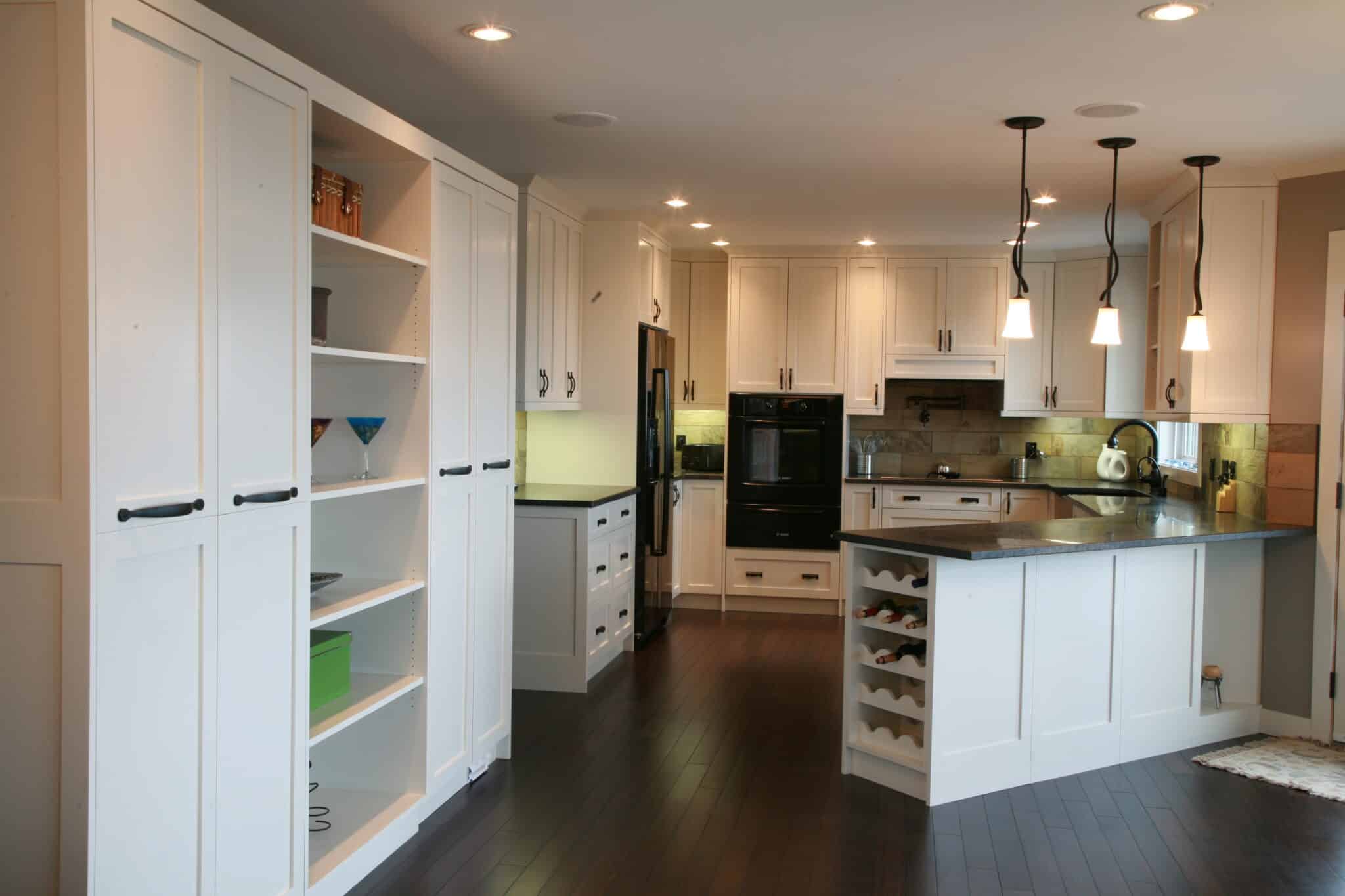
Drawer dividers, pull-out shelves, deep drawers, tray dividers, vertical baking-sheet storage, and full-height pantry cabinetry can improve function more effectively than simply adding bins. When renovating, design storage around the actual dimensions of your cookware, small appliances, recycling system, and food-buying habits.
In 2026, homeowners are placing greater emphasis on custom storage and warm, livable interiors rather than storage that feels purely utilitarian. Calgary design commentary has highlighted functional mudrooms, integrated storage, and custom millwork as priorities in current renovation projects.
How Can You Simplify Closets for Summer?
A seasonal closet change should make daily dressing easier without forcing you to make rushed decisions about your entire wardrobe.
Move heavy coats, boots, and winter accessories out of prime space after cleaning and repairing them. Keep transitional pieces available because Calgary weather can change quickly, even during warmer months. Store seasonal items in breathable containers where possible, and avoid placing delicate fabrics in damp or poorly ventilated areas.
Arrange summer clothing by the way you get dressed. Group workwear, casual clothing, exercise items, and special-occasion pieces if that reflects your routine. Use the most accessible shelves and rods for clothing worn frequently.
Do not purchase closet accessories until you know what is staying. Once the volume is established, use double hanging rods, shelves, drawers, hooks, and shoe storage to make better use of vertical space. A custom closet is most effective when designed around garment lengths, shoe quantities, accessories, and the needs of the specific person using it.
Include a small donation container in or near the closet. When something no longer fits, feels comfortable, or suits your lifestyle, place it there rather than returning it to the hanger. When the container is full, move it to its next destination.
How Can You Organize Bathrooms and Personal-Care Products?
Bathroom clutter often grows because small items enter the room faster than they leave. Samples, cosmetics, medications, hair tools, backup toiletries, and cleaning products compete for limited cabinet and drawer space.
Remove everything that is empty, damaged, no longer used, or past its safe period of use. Group remaining items into daily care, hair, skincare, first aid, medication, travel, and backups. Daily items should be easiest to reach. Backup products can be stored higher or farther back, but they should remain visible enough to prevent unnecessary purchases.
Use shallow drawer dividers instead of deep containers that allow small items to disappear. Add outlets inside appropriate cabinetry only when the design and electrical work are completed safely by qualified professionals. In a renovation, consider recessed medicine cabinets, vanity drawers, linen towers, niches, and storage that separates each person’s routine.
Expired and unused medications should not be flushed or poured down a sink. Health Canada advises Canadians to return unused and expired prescription medications, over-the-counter products, and natural health products to a local pharmacy for proper disposal.
Keep only products currently used in the shower inside the shower. Extra bottles make the area harder to clean and create visual clutter. A properly sized niche or wall-mounted shelf should hold current products without becoming a storage area for unopened supplies.
How Can You Organize Living and Working Areas?
Living rooms and home offices often become cluttered because they support several activities without clearly defined storage. Begin by returning items that belong elsewhere, then identify what regularly remains: remote controls, gaming equipment, blankets, books, paperwork, charging cables, hobby supplies, and pet accessories.
Match storage to frequency. A basket may suit blankets used every evening, while closed drawers are better for electronics or games used less often. Keep work documents in an action, reference, shred, recycle, or scan system rather than allowing paper to spread across the desk.
Digital files also need attention. Organize downloads, remove duplicate files, use consistent file names, and back up important household records. Renovation receipts, manuals, warranties, appliance details, insurance documents, paint colours, and contractor information should be stored in a system that can be searched easily.
Cable management can improve both the appearance and maintenance of a room. Remove unused chargers, label similar cables, use a charging drawer or station, and route cords so that floors and desks remain easy to clean.
In open-concept rooms, furniture placement, rugs, lighting, and low cabinetry can create zones without closing the space. A defined reading area, conversation zone, work area, or children’s activity corner can make a room feel more purposeful.
For an office that doubles as a guest room or hobby area, closed cabinetry, a compact desk, flexible furniture, or a wall bed can help the room change functions without requiring a major reset.
How Can You Turn the Basement Into Useful Space?
Basements often become storage areas by default because they are out of sight. Over time, unrelated items accumulate and the room becomes difficult to use for anything else.
Begin by defining the basement’s intended roles. It may need to support storage, laundry, exercise, entertainment, guests, hobbies, or a home office. Assign zones before deciding where individual belongings should go.
Keep stored items off the floor where possible and use shelving that allows air movement and inspection. Avoid keeping cardboard boxes in areas that may be vulnerable to moisture. Label all containers on the side facing the aisle, not only on the lid.
Place rarely used seasonal decorations farther from the entrance and keep regularly accessed items closer. Create a household inventory for items stored behind other possessions. A photograph of each shelf can be surprisingly effective when you need to remember what is stored there.
If the basement is expected to function as living space but remains unfinished, poorly lit, cold, or divided inefficiently, organization alone may not solve the problem. Finishing or renovating the basement can create purpose-built storage, a legal bedroom where applicable requirements are met, a family room, laundry cabinetry, a bathroom, or a flexible work area.
The most effective basement projects reserve enough storage from the beginning. Finishing every square foot without planning for mechanical equipment, seasonal items, luggage, tools, and household supplies can push clutter into other rooms.
How Can You Organize Decks, Patios, and Outdoor Living Areas?
Outdoor spaces become extensions of the home during summer. They may need to hold cushions, gardening supplies, dining accessories, children’s toys, barbecue tools, and maintenance equipment.
Begin by deciding what can safely remain outdoors. Weather-resistant deck boxes and cabinets can be useful, but they should not become places for damp textiles, hazardous products, or items that attract pests. Clean cushions before storing them and allow them to dry completely.
Create an outdoor dining zone close to the kitchen, a gardening zone near the yard or shed, and a play zone where toys can be returned easily. Use hooks for hoses and tools, and keep walkways clear.
A deck or patio renovation can incorporate benches with storage, privacy screens, covered areas, lighting, planters, and dedicated locations for cooking or entertaining. Storage should be integrated without crowding circulation or reducing usable seating.
Consider how the area will transition at the end of summer. When every item needs to move indoors, identify its winter storage location now. Buying outdoor accessories without planning where they will go later is one of the quickest ways to overcrowd a garage or basement.
How Can You Declutter Responsibly in Calgary?
A successful decluttering project includes a destination plan. Without one, donation bags remain in the hallway, hazardous materials return to the garage, and unwanted furniture moves from room to room.
Before beginning, identify where donations, electronics, scrap metal, paint, chemicals, batteries, medications, and regular waste will go. Confirm acceptance requirements before loading a vehicle because programs and locations may treat materials differently.
For Calgary household hazardous waste, keep products in their original containers when possible, do not mix chemicals, secure containers upright, and check the City’s current instructions for the selected drop-off location. The City’s 2026 guidance identifies free residential drop-off locations and includes materials such as household chemicals, paint products, batteries, automotive fluids, and fluorescent lights.
Donate only items that are clean, safe, complete, and usable. A donation centre should not become a disposal service for broken possessions.
Sell higher-value items only when you are willing to photograph, list, communicate with potential buyers, and arrange pickup. Give the sales process a deadline. Otherwise, the potential sale price may not justify weeks of continued clutter.
Create a removal area near the door or garage so that donations and returns do not become mixed into the household again. Schedule the drop-off instead of waiting until it becomes convenient.
When Is a Renovation Better Than Another Storage Container?
Containers are useful when a space has enough capacity but lacks structure. They are less effective when the room is too small, the layout wastes space, storage is inaccessible, or the household’s needs have changed.
Recurring warning signs include kitchen counters that cannot remain clear, an entrance without enough space for daily gear, a laundry room with no sorting surface, a basement that cannot support both living and storage, and closets that have only a single shelf and rod despite significant vertical space.
A renovation can solve these issues by adding built-in cabinetry, drawers, pull-outs, pantry storage, mudroom lockers, closet systems, wall beds, under-stair storage, laundry counters, garage cabinetry, or better room divisions. The design should start with an inventory of what must be stored and how often it is used.
Measure important possessions before designing cabinets. Storage for a stand mixer, recycling system, vacuum, sports equipment, luggage, or large serving pieces should be based on actual dimensions rather than assumptions.
Do not design every cabinet around your current belongings without considering change. Leave some adjustable shelving and flexible capacity. Children grow, hobbies change, technology evolves, and future homeowners may use rooms differently.
The objective is not maximum storage at any cost. It is the right amount of accessible storage in the right locations.
How Can You Maintain an Organized Home After Summer?
Maintenance should be built into existing routines. A ten-minute evening reset, a weekly refrigerator review, and a monthly donation drop-off may be enough when storage locations are logical.
Use a one-in, one-out guideline selectively for categories that tend to grow, such as water bottles, mugs, cosmetics, toys, and seasonal décor. Avoid applying it rigidly to necessities.
Review transition zones frequently. The entry, kitchen island, dining table, stairs, and laundry room are common collection points. When the same type of item repeatedly appears there, the home may need a storage location closer to that point.
Schedule seasonal reviews instead of waiting for clutter to become unmanageable. At the end of summer, assess outdoor furniture, sports gear, clothing, gardening supplies, and travel items before putting them away.
Invite everyone in the household to participate. Storage labels should be clear, hooks should be placed at usable heights, and frequently used items should be easy to return. A system that works for only one person is unlikely to remain effective.
Most importantly, adjust systems that are not working. Organization is not a test of discipline. When a household repeatedly ignores a system, the system may be too complicated, inaccessible, or poorly located.
How Can Lifestyle Renovations Help You Create a More Organized Home?
Decluttering can create meaningful improvement, but some organization problems are rooted in design. A kitchen may need more functional cabinetry. A basement may need defined rooms and integrated storage. A bathroom may need a vanity that better supports daily routines. A garage or mudroom may need durable, purpose-built systems. An underused room may need to become a flexible space that works for the way your family lives today.
Lifestyle Renovations helps Calgary homeowners plan and complete renovations that improve both appearance and function. By considering storage, circulation, lighting, materials, and everyday routines together, a renovation can reduce clutter rather than simply providing more places to hide it.
A well-organized home does not have to be perfectly minimal or permanently tidy. It should make it easier to find what you need, put things away, welcome guests, complete daily tasks, and enjoy the season.
This summer, begin with one area that creates frustration. Remove what no longer belongs, improve the system for what remains, and pay attention to the limitations of the room itself.
A thoughtful summer organization project can create immediate relief while also revealing renovation opportunities that make your home work better throughout every season.
Related Posts
The Best Advice You Could Ever Get About Maximizing Storage And Organization In Your Home Renovation


Part 2: Transform Your Backyard into a Summer Oasis – Enhancements and Personal Touches

The Importance of Exterior Maintenance in Warmer Months

Beat the Heat: Tips for Efficient Cooling in Summer
One thought on “Summer Home Organization Tips for a More Functional Home in 2026”
Comments are closed.