


LifeStyle Renovations Blog
Summer Lawn Care: How to Keep Your Calgary Lawn Healthy in 2026


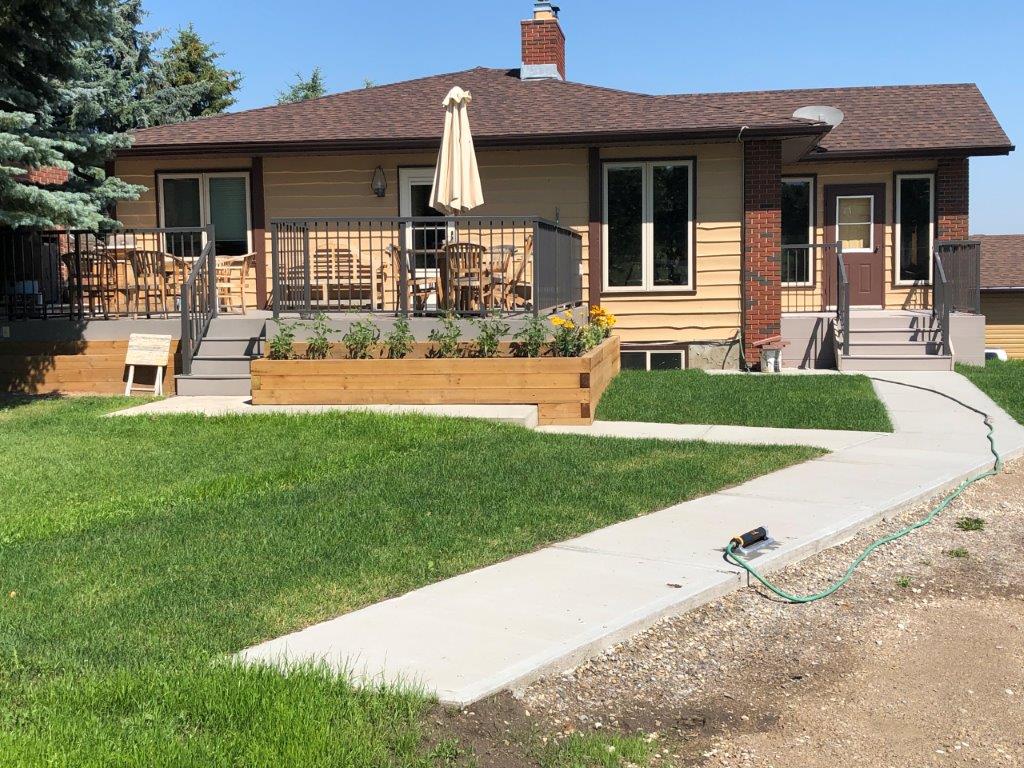
A healthy lawn can make your entire outdoor space feel more inviting. It creates a comfortable place for children to play, gives family and friends room to gather, and provides a finished backdrop for decks, patios, gardens, and other landscaping features. However, maintaining green grass through a Calgary summer is not always as simple as turning on the sprinkler and mowing once a week.
Calgary lawns must handle intense sunlight, dry periods, sudden temperature changes, compacted clay-based soil, hailstorms, wind, and occasional stretches of extreme heat. Grass may grow quickly during cooler, wetter periods and then slow down or become dormant when temperatures rise. A lawn-care routine that worked well in May may therefore need to be adjusted significantly by the middle of July.
There is also an important change for 2026. As of April 29, 2026, Calgary has a year-round lawn and landscape watering schedule for sprinklers and automatic irrigation systems. Homeowners must now consider their assigned watering days and permitted watering hours when planning their summer lawn care.
The goal should not be to force your lawn into looking perfectly green every day of the summer. A better approach is to develop deeper roots, healthier soil, stronger grass, and a yard that can recover from heat and drought with less water and fewer treatments.
The following summer lawn care guide explains how to water, mow, fertilize, repair, and protect a Calgary lawn while adapting to current 2026 watering requirements.
Why Does Summer Lawn Care Require a Different Approach in Calgary?
Most lawns in Calgary contain cool-season grasses. These grasses grow most actively when temperatures are moderate, which is why lawns often look their best in late spring and early fall. During very hot weather, their growth may slow considerably.
This slowdown does not necessarily mean that the lawn is unhealthy. Grass naturally reduces growth when heat and moisture loss exceed what its roots can comfortably support. In some cases, it may enter a temporary dormant state and lose some of its green colour.
Attempting to force rapid growth during these conditions can create new problems. Excessive watering may keep roots close to the surface, while heavy nitrogen applications can produce tender growth that is more vulnerable to heat, insects, and disease. Cutting the grass too short can expose the soil to direct sunlight and increase moisture loss.
Successful summer lawn care therefore depends on responding to actual conditions rather than following a rigid calendar. Consider rainfall, soil moisture, grass growth, shade, wind exposure, and temperature before deciding whether the lawn needs water, fertilizer, or mowing.
The healthiest lawn is not necessarily the lawn receiving the most attention. It is the lawn receiving the right care at the right time.
What Is Calgary’s 2026 Lawn-Watering Schedule?
Calgary’s lawn and landscape watering schedule took effect on April 29, 2026. It applies throughout the year when lawns or landscaped areas are watered using sprinklers or automatic irrigation systems.
Homes with an even-numbered street address ending in 0, 2, 4, 6, or 8 may use sprinklers on Tuesday, Thursday, and Saturday. Homes with an odd-numbered address ending in 1, 3, 5, 7, or 9 may use them on Wednesday, Friday, and Sunday.
On assigned days, sprinkler and irrigation-system watering is permitted from midnight to 10 a.m. and again from 7 p.m. to 11:59 p.m. The schedule is intended to distribute outdoor water demand more evenly and reduce evaporation during the hottest part of the day.
The schedule does not mean that a lawn should automatically be watered three times every week. These are the days on which sprinkler watering is available, not a recommendation to irrigate during every permitted window. Established grass may need considerably less water depending on rainfall, temperature, shade, soil type, and its current stage of growth.
There are establishment-period exceptions for newly planted material. New sod may be watered outside the regular schedule for 21 days, while new grass seed may receive establishment watering for 45 days. Newly planted trees and shrubs have a longer establishment exemption. Temporary outdoor water restrictions introduced during a drought, emergency, or infrastructure problem can still override the regular schedule.
Hand watering gardens with a watering can or a hose equipped with a spring-loaded shut-off nozzle remains permitted outside the assigned schedule. Homeowners should nevertheless check current City of Calgary information whenever water conditions change.
How Much Water Does a Lawn Need During Summer?
An established lawn generally benefits more from deep, occasional watering than from light watering every day.
Frequent shallow irrigation moistens only the upper surface of the soil. This encourages roots to remain near the surface, where they are more exposed to heat and rapid moisture loss. Deeper watering allows moisture to move farther into the root zone and encourages grass to develop a more resilient root system.
A commonly used summer guideline is approximately 2.5 centimetres, or one inch, of total water per week, including rainfall. This should be treated as a starting point rather than an automatic requirement. Both the City of Calgary and Health Canada recommend deep watering while avoiding unnecessary or excessive irrigation.
Place several empty tuna cans, pet-food cans, or rain gauges around the lawn while the sprinkler runs. Measuring multiple areas is important because sprinklers rarely distribute water perfectly evenly. One section may receive the full amount while a corner near the sidewalk receives very little.
Once you know how long your sprinkler takes to provide the desired depth, you can create a more accurate watering routine. You may find that one section needs 40 minutes while another requires a repositioned sprinkler or shorter second cycle.
Calgary’s clay-based soils can absorb water slowly. If water begins flowing down the sidewalk or collecting in low areas, stop irrigating and allow it to soak in. Resume later during the same permitted watering window. This “cycle-and-soak” approach can move water deeper into the ground without wasting as much through runoff.
Before watering, check the soil beneath the grass rather than judging the lawn only by its surface colour. Push a screwdriver several centimetres into the soil or remove a small soil plug. If the soil is still cool and moist below the surface, irrigation may not be necessary.
Signs that a lawn may need water include grass blades folding inward, footprints remaining visible after the lawn has been walked on, and the colour changing from green to a dull blue-green or grey-green. Mushrooms, constantly soft ground, puddles, or a musty smell may indicate that the lawn is receiving too much water.
When Is the Best Time to Water the Lawn?
Early morning is generally the most efficient time to water an established lawn. Temperatures are cooler, wind is often lighter, and less water is lost to evaporation. The grass also has time to dry during the day.
Under Calgary’s 2026 schedule, sprinkler use is allowed from midnight until 10 a.m. and from 7 p.m. until 11:59 p.m. on the property’s assigned days. Where possible, morning watering is usually preferable because grass remaining wet for long periods overnight may be more susceptible to certain fungal problems.
Avoid watering during the hottest part of the afternoon. A significant portion of the water may evaporate before entering the root zone, particularly on hot or windy days.
Automatic irrigation systems should not simply run on the same program throughout the entire summer. Adjust the controller after rain, during cooler periods, and when grass growth slows. Inspect sprinkler heads regularly for leaks, clogs, poor alignment, and misting. Water landing on a driveway, deck, fence, or sidewalk is not helping the lawn.
A rain sensor, soil-moisture sensor, or weather-responsive irrigation controller can further reduce unnecessary watering. Even a simple rain gauge can prevent the system from running immediately after a storm.
How High Should Grass Be Mowed in Summer?
One of the most effective summer lawn care practices is also one of the simplest: allow the grass to remain longer.
The City of Calgary recommends keeping grass approximately three inches high. Longer blades shade the soil, help keep roots cooler, retain moisture, and support deeper root growth. Health Canada similarly recommends mowing to approximately 6 to 8 centimetres, or 2.5 to 3 inches.
A lawn cut extremely short may initially look neat, but it has less leaf surface available for photosynthesis. The soil is exposed to more sunlight, moisture evaporates faster, and weed seeds receive more of the light they need to germinate.
Follow the one-third rule whenever possible. Do not remove more than approximately one-third of the grass blade during a single mowing. If the lawn has become overgrown while you were away, raise the mower and reduce the height gradually over several cuts.
Avoid mowing during the hottest part of the day, especially when the lawn is dry or heat-stressed. Mowing in the morning after dew has dried or in the cooler part of the evening reduces stress on both the lawn and the person operating the mower. Do not mow wet grass, as wet clippings can clump, the mower may produce an uneven cut, and the lawn surface can be damaged by heavy equipment.
The mowing schedule should follow grass growth rather than the day of the week. During a cool and rainy June, the lawn may need frequent mowing. During a hot, dry August, it may grow very slowly and require little cutting.
Calgary’s Community Standards Bylaw requires property owners to keep grass and herbaceous plants below 15 centimetres, or six inches, in height.
Why Does a Sharp Mower Blade Matter?
A sharp mower blade cuts grass cleanly. A dull blade tears and shreds the ends, leaving the lawn with a pale or brownish cast several days after mowing.
Torn grass loses more moisture and may be more vulnerable to stress and disease. Check the blade periodically and have it sharpened whenever the cutting edge becomes rounded, chipped, or visibly damaged.
After mowing, examine several blades of grass. A clean edge indicates that the mower is cutting properly. Frayed, stringy, or torn ends suggest that the blade needs attention.
Change the mowing direction from one cut to the next. Alternating between north-to-south, east-to-west, and diagonal patterns helps prevent grass from leaning consistently in one direction. It can also reduce rutting and uneven compaction.
Should Grass Clippings Be Left on the Lawn?
In most situations, grass clippings should be left on the lawn.
Short clippings break down quickly, return nutrients to the soil, and help conserve moisture. This practice is often called grasscycling. The City of Calgary describes grass clippings as a form of free fertilizer that can support greener growth while discouraging weeds and retaining moisture.
Clippings do not normally create a serious thatch problem. Thatch is composed primarily of slowly decomposing stems, roots, and other fibrous plant material rather than freshly cut grass blades.
Clippings may need to be collected when the lawn has grown excessively long, when they form thick wet piles, or when the lawn contains mature weed seed heads that you do not want to redistribute. Even then, mowing more frequently and removing only part of the growth may be preferable to cutting everything extremely short in one pass.
Keep clippings out of streets and storm drains. Sweep or blow them back onto the lawn after mowing rather than allowing them to enter the drainage system.
Should You Fertilize a Lawn During Hot Weather?
More fertilizer does not automatically produce a healthier lawn.
Nitrogen encourages green leaf growth. That can be helpful when grass is actively growing, but a large nitrogen application during hot, dry weather may push the lawn to produce new growth at a time when it is already struggling to conserve water.
The City of Calgary recommends slow-release fertilizer when fertilization is needed and identifies early summer, after active growth has begun, and fall as suitable application periods. Health Canada advises avoiding fertilizer applications during hot or dry conditions, which commonly occur from mid-June through early August.
Before applying fertilizer, ask why the lawn needs it. Pale grass could indicate a nutrient deficiency, but it could also result from drought, compacted soil, poor drainage, shade, pet urine, mowing damage, or an irrigation problem.
A soil test provides a more reliable understanding of nutrient levels, pH, and organic matter. Calgary soils tend to be clay-based and alkaline, so automatically adding lime or a high-phosphorus fertilizer may not be appropriate.
When fertilizer is justified, choose a slow-release lawn product and follow its label precisely. Measure the lawn instead of estimating its size. Applying fertilizer at a higher rate than recommended can burn grass, stimulate excessive growth, and increase the risk of nutrients entering storm drains and waterways.
Avoid fertilizing when heavy rain is expected within the next day. Sweep granules off hard surfaces and back onto the lawn. Do not attempt to revive a dormant brown lawn with a large dose of fertilizer. Wait until cooler conditions and active growth return.
Compost can also improve soil structure and provide a gradual source of nutrients. A thin layer may be raked across the lawn as topdressing, particularly when combined with overseeding.
How Can Better Soil Improve Summer Lawn Care?
Many lawn problems begin below the grass.
Compacted soil limits the movement of water, oxygen, and nutrients into the root zone. Poor soil can cause water to run across the surface while the roots below remain dry. It can also make it difficult for grass to develop the deep root system needed to survive Calgary’s summer conditions.
Soil health can be improved gradually through topdressing, compost, core aeration, and appropriate grass selection. The City recommends adding compost to improve Calgary’s clay-based soil and notes that a deeper layer of topsoil can improve both water absorption and drainage.
To topdress, spread a thin layer of screened compost or quality soil across the grass and rake it gently so that most blades remain visible. Do not bury the lawn beneath a heavy layer. Repeating a light application periodically is generally safer than attempting to correct the soil with one excessive application.
Different parts of a yard may have very different soil conditions. Areas near construction, sidewalks, gates, and patios are often more compacted. South-facing slopes may dry quickly, while shaded locations beside fences may stay wet for longer periods.
Treat each section according to its conditions. A single irrigation or fertilizer rate may not be appropriate for the entire property.
How Should Weeds Be Managed During Summer?
The best defence against weeds is a dense, healthy lawn.
Longer grass shades the soil and reduces the amount of light reaching weed seeds. Appropriate watering encourages deeper roots, while overseeding fills spaces that would otherwise be occupied by weeds.
When only a few weeds are present, remove them manually before they produce seed. Pulling is easier after rainfall or watering because the soil is softer. Try to remove as much of the root as possible, particularly with perennial weeds such as dandelions.
A few weeds do not necessarily justify treating the entire lawn. Health Canada recommends an Integrated Pest Management approach that begins with prevention, monitoring, accurate identification, and an assessment of whether treatment is truly necessary. Recurring weeds may indicate mowing, drainage, fertility, compaction, or soil problems that should be corrected.
Property owners in Calgary are responsible for controlling noxious weeds and destroying prohibited noxious weeds as required under Alberta’s Weed Control Act and local bylaws. Dandelions are not classified as noxious weeds, although grass and herbaceous plants must still be kept below the City’s permitted height.
When a pesticide is considered, identify the weed or pest first. Use only a product authorized for that purpose in Canada, look for a Pest Control Products registration number, and follow all label directions. The label specifies where, when, and how the product may legally be applied.
Spot treatment is generally more appropriate than automatically applying a product across the entire property. Avoid spraying during windy weather or when rain could wash the treatment away.
How Can You Tell Whether Brown Grass Is Dormant or Dead?
Brown grass during summer is not always dead.
Cool-season grass can enter dormancy during hot or dry weather. Dormancy allows the plant to conserve moisture and energy until conditions become more favourable. The lawn may appear tan or brown but still have living crowns and roots.
Dormant grass usually changes colour relatively evenly across a large area. When cooler temperatures and moisture return, it may begin growing and gradually become green again.
Dead grass is more likely to appear in distinct patches or pull away easily from the soil. Damage caused by pet urine, chemical spills, mower scalping, insects, disease, buried construction debris, or irrigation gaps may create irregular patterns rather than an evenly dormant lawn.
Before applying fertilizer or pesticide, inspect the affected area closely. Check the soil moisture, look at the roots, examine the pattern of damage, and confirm that the sprinkler reaches the area. Health Canada notes that plant damage may result from poor growing conditions, maintenance practices, road salt, or dog urine rather than a pest.
A dormant lawn should experience limited traffic because dry blades and crowns can be damaged more easily. Avoid unnecessary mowing and do not try to shock the lawn back into growth with heavy irrigation or fertilizer.
Should You Aerate or Dethatch During Summer?
Core aeration removes small plugs of soil from the lawn, allowing air, water, and nutrients to move more easily into compacted areas. It can be valuable where soil is hard, water does not penetrate well, or roots remain shallow.
However, timing matters. Aerating a severely heat-stressed lawn in the middle of summer can add more stress. In Alberta, the City identifies May to June and mid-September as preferred aeration periods. Soil should be moist but not saturated, and hollow-tine or core aerators are generally more effective than tools that simply push solid spikes into the ground.
The soil plugs can usually be left on the lawn to break down naturally.
Dethatching should also be performed only when necessary. A thin thatch layer can help insulate the soil, while a thick layer can interfere with water and nutrient movement. The City considers approximately half an inch or less potentially beneficial, while a layer approaching one inch can create problems.
Do not aggressively power-rake a dry, dormant, or recently established lawn. Dethatching is better performed while the lawn is actively growing and able to recover.
When Should Bare or Thin Areas Be Overseeded?
Bare soil creates an opportunity for weeds, so thin areas should be repaired when weather conditions support seed germination.
Late summer to early fall is often one of the best overseeding periods. Soil remains warm enough for germination, while air temperatures begin to moderate. Health Canada also identifies late summer to early fall as a preferred overseeding period.
Prepare the area by removing loose dead grass and lightly loosening the soil. Seed must make contact with the soil; scattering it on top of thick thatch is unlikely to produce good results.
For Calgary conditions, the City recommends cool-season seed blends containing at least 60 per cent fescue and no more than approximately 20 per cent Kentucky bluegrass. Fescue-dominant and drought-tolerant blends generally require less irrigation and maintenance than traditional Kentucky bluegrass-heavy lawns.
Choose the mixture according to sunlight, traffic, moisture, and intended use. A grass blend designed for full sun may perform poorly in a heavily shaded side yard. Areas that receive constant foot traffic may be better suited to stepping stones, mulch, gravel, or another durable surface.
Keep new seed consistently moist until germination and establishment. Calgary’s 2026 watering schedule provides a 45-day establishment exception for new seed, but water should still be applied efficiently and only as quickly as the soil can absorb it. New sod receives a 21-day establishment exception.
How Can a Lawn Be Made More Drought-Tolerant?
Drought tolerance is created through a collection of small decisions rather than a single product.
Keep the grass longer, water deeply, improve the soil, and avoid excessive nitrogen. Select fescue-dominant seed when repairing or replacing the lawn. Correct irrigation leaks and adjust sprinkler patterns so water reaches the grass rather than hard surfaces.
You can also reconsider how much conventional lawn the property actually needs. Grass is useful in areas intended for recreation, pets, and family activities, but it may not be the best surface for every corner.
Narrow strips beside driveways, steep slopes, permanently shaded sections, and areas under mature trees may be difficult to maintain. Replacing these sections with drought-tolerant groundcovers, native plants, mulch, decorative stone, pathways, or expanded garden beds can reduce water use while adding colour and visual interest.
The City of Calgary identifies microclover, fescue grasses, hardy groundcovers, perennials, trees, and shrubs as potential alternatives that can reduce water and maintenance requirements.
Rain barrels can provide water for garden beds and container plants, helping reserve treated water for uses where it is truly needed. Mulch around trees and shrubs reduces evaporation and moderates soil temperature, although mulch should not be piled against trunks.
A water-wise landscape does not need to look dry or unfinished. Thoughtful planting, defined borders, layered vegetation, attractive pathways, and well-designed outdoor living spaces can create a yard that looks intentional throughout the year.
What Summer Lawn Care Mistakes Should Be Avoided?
Several common habits can weaken a lawn even when they are intended to improve it.
Cutting grass extremely short is one of the most damaging summer practices. Scalping reduces the plant’s ability to produce energy and exposes the soil to heat.
Watering for a few minutes every day is another frequent mistake. It may keep the surface damp while failing to provide meaningful moisture to the root zone.
Applying fertilizer during extreme heat can stimulate growth the lawn does not have enough water to support. Likewise, treating every brown patch as an insect or disease problem can result in unnecessary pesticide use.
Other mistakes include mowing with a dull blade, allowing automatic irrigation to run after rainfall, watering sidewalks, leaving heavy piles of wet clippings, and performing aggressive aeration or dethatching while the lawn is dormant.
The solution is not a more complicated routine. It is a more observant one. Check the lawn before acting and address the underlying cause rather than responding only to its appearance.
What Should Be Included in a Simple Summer Lawn Care Schedule?
A practical summer routine can be organized around a few recurring checks:
- Inspect the lawn weekly for dry areas, weeds, unusual patches, pet damage, and irrigation problems.
- Check soil moisture before deciding to water.
- Follow Calgary’s assigned watering days and permitted hours when using a sprinkler or automatic irrigation system.
- Mow according to growth and maintain a height of approximately three inches.
- Follow the one-third rule and use a sharp mower blade.
- Leave short grass clippings on the lawn whenever practical.
- Delay fertilizer, aeration, dethatching, or overseeding during extreme heat.
- Prepare thin areas for overseeding when cooler late-summer conditions arrive.
- Adjust irrigation after rainfall and as seasonal temperatures change.
The schedule should remain flexible. A cool, rainy summer requires a different approach from a hot, dry one.
Frequently Asked Questions About Summer Lawn Care
How often should I water my lawn in Calgary?
There is no single frequency that is appropriate for every Calgary lawn. An established lawn may need approximately one inch of total water per week during active growth, including rainfall, but soil type, shade, wind, temperature, and dormancy can change that requirement.
Water only after checking the soil. When irrigation is needed, apply it deeply rather than providing a small amount every day. Sprinkler use must follow Calgary’s assigned 2026 watering days and times.
Can I water my lawn every day during a heat wave?
Daily watering is generally not recommended for an established lawn. It can encourage shallow rooting and may keep the soil excessively wet.
New seed and sod need more frequent moisture while becoming established and qualify for temporary exceptions under Calgary’s watering schedule. Established grass should be watered according to actual soil conditions. Any temporary City water restriction will override the regular schedule.
Is it better to mow before or after watering?
Mow when the grass is dry. Mowing immediately after irrigation can create clumps, produce an uneven cut, and leave tracks in soft soil.
Where possible, mow before the next watering cycle or wait until the grass blades and surface have dried. Avoid mowing during the hottest part of the day.
Should I fertilize a brown lawn?
Not automatically. A brown lawn may be dormant because of heat or limited moisture. Fertilizer will not correct dormancy and may increase stress if it stimulates growth during hot, dry weather.
Check soil moisture, irrigation coverage, roots, and the pattern of discolouration first. Fertilize only when grass is actively growing and when soil conditions indicate that additional nutrients are appropriate.
What mowing height is best during summer?
Approximately three inches is a practical target for many Calgary lawns. This height helps shade the soil, retain moisture, and protect roots during hot weather.
Avoid removing more than one-third of the grass blade at one time. If the lawn has become too long, reduce its height gradually over several mowing sessions.
Are grass clippings bad for the lawn?
Short clippings are generally beneficial. They decompose quickly, return nutrients, and help retain moisture.
Remove or redistribute clippings when they form thick piles that could smother the grass. Clippings containing mature weed seeds may also be collected rather than spread across the property.
What is the best grass seed for Calgary?
A cool-season, drought-tolerant mixture with a high percentage of fescue is often a suitable choice. The City recommends blends containing at least 60 per cent fescue and no more than approximately 20 per cent Kentucky bluegrass.
The final choice should also reflect sunlight, foot traffic, soil, irrigation, and the intended use of the area.
How can I repair dog urine spots?
Water the affected spot after it is noticed to help dilute salts in the soil. Once the damaged grass has died, remove the loose material, lightly prepare the soil, and apply seed or a small piece of sod.
Avoid applying random soil amendments or chemicals without understanding the soil condition. Training a dog to use a designated area can reduce repeated damage throughout the lawn.
How do I know whether my lawn needs aeration?
Possible signs include hard soil, shallow grass roots, poor water penetration, frequent puddling, and thinning in high-traffic areas.
Core aeration is best performed while the grass is actively growing and the soil is moist but not saturated. Avoid aerating during severe heat or dormancy.
Can I let my lawn go dormant during summer?
Yes. Allowing an established cool-season lawn to become temporarily dormant can be a practical response to extended heat or drought.
Limit traffic on dormant grass, avoid aggressive mowing and fertilizing, and monitor it for signs of actual damage. Healthy dormant grass can often recover when temperatures moderate and moisture returns.
Can Better Summer Lawn Care Improve the Entire Outdoor Space?
A well-maintained lawn can help connect the different parts of a landscape. It provides contrast around garden beds, creates a soft transition between a home and a patio, and gives decks and outdoor living areas a more complete setting.
However, a beautiful yard does not need to consist entirely of grass. In many Calgary properties, the most attractive and practical design combines usable lawn with garden beds, trees, shrubs, walkways, patios, decks, and drought-tolerant planting.
The right balance can reduce maintenance while making the yard more functional. A smaller, healthier lawn is often more enjoyable than a large lawn that is difficult to water, mow, and repair.
Build a Healthier Lawn and a More Enjoyable Yard
Effective summer lawn care is not about watering constantly or keeping the grass unnaturally short. It is about creating conditions that allow the lawn to withstand Calgary’s changing summer weather.
Water deeply and only when necessary. Follow Calgary’s 2026 watering schedule. Maintain a grass height of approximately three inches, keep the mower blade sharp, and leave short clippings behind. Improve compacted soil, use fertilizer carefully, and repair thin areas when cooler conditions provide a better opportunity for new grass to establish.
Most importantly, look at the lawn as one part of the overall landscape. When grass, gardens, walkways, decks, and gathering areas are planned together, the result can be a more attractive, water-conscious, and enjoyable outdoor environment.
At Lifestyle Renovations, we help Calgary homeowners create outdoor spaces that complement how they live. Whether you are planning a new deck, improving your backyard layout, or developing a more comfortable area for entertaining, thoughtful design can help turn the yard into a natural extension of your home.
One thought on “Summer Lawn Care: How to Keep Your Calgary Lawn Healthy in 2026”
Comments are closed.