

LifeStyle Renovations Blog
Lighting Renovations – Recessed Lighting Pros & Cons

Lighting can completely change the way a home feels. A room with poor lighting can look smaller, darker, older, or less inviting than it really is, while a well-designed lighting plan can make the same space feel warm, open, functional, and beautifully finished. That is why lighting renovations are one of the most effective ways to improve both the look and usability of a home.
One of the most popular options homeowners consider during lighting renovations is recessed lighting. Also known as pot lights, can lights, or downlights, recessed lights are installed into the ceiling so the fixture sits flush or nearly flush with the surface. Instead of hanging down into the room, the light is tucked away, creating a clean and modern appearance.
Recessed lighting can be used almost anywhere in the home, including kitchens, living rooms, bathrooms, basements, hallways, home offices, and bedrooms. It can provide general room lighting, highlight specific features, improve task lighting, or help modernize an older space. However, recessed lighting is not the perfect answer for every room or every renovation. Like any design choice, it has advantages and disadvantages.
If you are planning lighting renovations in your home, it is important to understand how recessed lighting works, where it performs best, what types of fixtures are available, and what potential drawbacks should be considered before installation.
What Is Recessed Lighting?
Recessed lighting refers to light fixtures that are installed into hollow openings in the ceiling, wall, or occasionally the floor. In most residential renovations, recessed lighting is installed in the ceiling. The fixture is set into the ceiling cavity, with only the trim or face of the light visible from below.
Because the fixture is recessed into the ceiling, the lighting effect is clean, subtle, and streamlined. Instead of drawing attention to the fixture itself, recessed lighting helps illuminate the room while keeping the ceiling visually uncluttered.
This is one reason recessed lighting is often used in modern lighting renovations. It works well in spaces where homeowners want a brighter room without adding hanging fixtures, lamps, or bulky ceiling lights. It is especially useful in rooms with lower ceilings, open-concept layouts, or areas where a clean architectural look is desired.
Recessed lighting can also be used to direct attention to a specific area. For example, it can be placed above a kitchen island, along a hallway, over a reading area, around a fireplace wall, or near built-in shelving. When placed properly, recessed lights can add depth, balance, and visual interest to a room.
Why Recessed Lighting Remains Popular in 2026
Lighting renovations have changed significantly over the past decade. Older homes often relied on one central ceiling fixture in each room, which frequently created dark corners and uneven light. Today, homeowners are looking for layered lighting that combines ambient lighting, task lighting, and accent lighting.
Recessed lighting fits into this modern approach because it can be used as one layer within a larger lighting plan. In 2026, the strongest lighting designs are not usually based on recessed lighting alone. Instead, recessed lights are often combined with pendants, sconces, under-cabinet lighting, decorative fixtures, LED strips, lamps, and smart controls.
This is an important update for homeowners. Years ago, many renovation plans relied heavily on rows of pot lights across an entire ceiling. While this can make a room brighter, it can also make a space feel flat or overly commercial if not balanced with other lighting sources. Today, recessed lighting works best when it is planned carefully and used with intention.
Modern recessed lighting also has several advantages over older fixtures. LED technology has made recessed lights more energy efficient, longer lasting, and available in a wider range of colour temperatures. Many newer fixtures are slim, low-profile, dimmable, and compatible with smart lighting systems. Some options also allow homeowners to adjust the colour temperature from warm white to cooler white, making the lighting more flexible for different times of day and different uses.
For homeowners planning lighting renovations, this means recessed lighting is still a strong option, but it should be part of a thoughtful design rather than a one-size-fits-all solution.
How Recessed Lighting Is Installed
A recessed light fixture typically includes several main components: the housing, the trim, the light source, and the wiring or driver. In older-style recessed lights, the housing was often a metal can installed above the ceiling. In many modern renovations, low-profile or canless LED recessed lights are now common. These are slimmer and can sometimes be easier to install in tight ceiling spaces.
The housing or fixture body is the part that sits inside the ceiling. It contains the electrical components and supports the light. The trim is the visible part of the fixture that sits at the ceiling surface. The trim affects both the look of the fixture and the way the light is distributed.
During lighting renovations, trim selection deserves careful attention. Even though recessed lighting is designed to be subtle, the trim is still visible. The style, colour, size, shape, and depth of the trim can influence the overall look of the room. White trims are common because they blend into most ceilings, but black, brushed metal, square, and decorative trims may also be used depending on the design style.
Placement is equally important. Recessed lights should not simply be installed in a grid without considering the room’s layout. A good lighting plan considers ceiling height, furniture placement, work zones, natural light, wall colours, cabinetry, artwork, and the atmosphere the homeowner wants to create.
In Calgary and other Alberta communities, electrical requirements also need to be considered. Replacing an existing fixture may be different from adding new recessed lights, extending wiring, or altering a branch circuit. If lighting renovations involve new wiring, additional fixtures, or changes to the electrical layout, permits and qualified electrical work may be required. This is one of the reasons it is beneficial to work with an experienced renovation contractor who can coordinate design, electrical planning, and code requirements properly.
Types of Recessed Lighting Trims
Recessed lighting is available in several trim styles. The trim affects the appearance of the fixture and the direction, spread, and softness of the light. Choosing the right trim is an important part of successful lighting renovations.
Baffle Trim
Baffle trim is one of the most common types of recessed lighting trim. It has a ribbed interior that helps reduce glare. Because the bulb or LED module is set slightly back from the ceiling surface, the light feels softer and less harsh.
Baffle trims are often used in living rooms, bedrooms, basements, and general-purpose spaces. They are a good option when homeowners want comfortable overall lighting without too much glare.
Reflector Trim
Reflector trim has a smooth, shiny, or mirrored interior surface that helps increase brightness. This trim can make the light feel stronger and more direct. It may be used in kitchens, high ceilings, or areas where stronger illumination is needed.
Reflector trims can be useful, but they should be chosen carefully. In some rooms, they may create more glare than desired, especially if the ceiling is low or the lights are placed directly above seating areas.
Open Trim
Open trim has a simple design where the bulb or LED source is more exposed. This allows more unrestricted light to spread into the room. Open trims can be practical and affordable, but they may not offer the same glare control as baffle or deeper recessed options.
Eyeball Trim
Eyeball trim allows the light to pivot or rotate. This makes it useful for highlighting a feature such as artwork, a fireplace, shelving, or a textured wall. Because the fixture can be aimed, it provides more flexibility than a fixed downlight.
The visible part of the eyeball trim may extend below the ceiling slightly, so homeowners should consider whether the appearance fits the style of the room.
Gimbal Trim
Gimbal trim is similar to eyeball trim but usually has a cleaner, more modern appearance. The light can tilt or rotate while staying more contained within the fixture. Gimbal recessed lights are often used for accent lighting or sloped ceilings.
They are a good choice when lighting renovations need both flexibility and a sleek look.
Pinhole Trim
Pinhole trim narrows the light into a small, focused beam. It is often used for dramatic accent lighting rather than general lighting. For example, it can highlight a sculpture, artwork, niche, or architectural feature.
Pinhole trims are not typically the best choice for lighting an entire room because they produce a tighter beam with less spread.
Wall-Wash Trim
Wall-wash trim is designed to direct light across a wall surface. This can help highlight artwork, stone, tile, paneling, built-ins, or feature walls. It can also make a room feel larger by brightening vertical surfaces instead of only directing light downward.
Wall-wash lighting can be an excellent choice in more refined lighting renovations because it adds depth and dimension.
Shower Trim
Shower trim is designed for wet or damp locations, depending on the fixture rating. It often includes a lens or sealed cover and is commonly used in bathrooms, showers, laundry rooms, or other moisture-prone areas.
When recessed lighting is installed in a bathroom or shower area, using the correct rated fixture is essential for safety and performance.
Recessed Lighting Sizes
Recessed lighting is available in different sizes, commonly ranging from about 2 inches to 6 inches in diameter. The right size depends on the room, ceiling height, design style, and purpose of the light.
Smaller recessed lights, such as 2-inch, 3-inch, or 4-inch fixtures, are popular in modern lighting renovations because they look more discreet. They work well for accent lighting, smaller rooms, hallways, or areas where a clean ceiling design is important.
Larger recessed lights, such as 5-inch or 6-inch fixtures, can provide broader illumination and may be suitable for larger rooms, basements, or spaces with higher ceilings. However, larger trims are more visible, so they should be chosen carefully based on the room’s style.
Ceiling height is another important factor. The higher the ceiling, the more the light spreads before reaching the floor or work surface. Higher ceilings may require more powerful fixtures, narrower beam angles, or more strategic placement. Lower ceilings may benefit from smaller, glare-controlled fixtures that do not overwhelm the space.
A good lighting design should also consider lumens rather than just fixture size. Lumens measure brightness, while watts measure energy use. With LED lighting, a lower wattage fixture can still provide excellent brightness. This is why modern lighting renovations focus on fixture performance, beam spread, colour temperature, dimming quality, and placement rather than simply choosing the biggest light.
Colour Temperature and Light Quality
One of the most important parts of recessed lighting design is colour temperature. Colour temperature is measured in Kelvin and describes whether the light appears warm, neutral, or cool.
Warm white light, often around 2700K to 3000K, creates a cozy and inviting atmosphere. It works well in living rooms, bedrooms, dining rooms, and many basement spaces. Neutral white light, often around 3500K, can work well in kitchens, bathrooms, laundry rooms, and home offices. Cooler white light, around 4000K or higher, can feel brighter and more energizing, but it may also feel too stark in some residential spaces.
For most home lighting renovations, warmer or neutral LED lighting is usually the safest and most comfortable choice. Very cool lighting can make a home feel clinical if it is overused.
Colour rendering is also important. A fixture with a higher colour rendering index, often referred to as CRI, helps colours appear more accurate. This matters in kitchens, bathrooms, closets, dressing areas, and anywhere finishes need to look natural. Poor-quality lighting can make paint colours, countertops, tile, flooring, and cabinetry appear dull or distorted.
In 2026, many homeowners are also considering tunable white lighting. These fixtures allow the colour temperature to be adjusted, often from warm to cool. This can be useful in multipurpose rooms where the same space may be used for relaxing, working, entertaining, and cleaning.
Pros of Recessed Lighting
Recessed lighting has many advantages, which is why it continues to be a popular choice during lighting renovations.
Clean, Modern Appearance
One of the biggest benefits of recessed lighting is its clean look. Because the fixture is installed into the ceiling, it does not visually compete with furniture, cabinets, artwork, or decorative fixtures. This creates a streamlined appearance that works well in both modern and transitional homes.
For homeowners who want a cleaner ceiling line, recessed lighting is often more appealing than flush-mount fixtures or track lighting.
Great for Low Ceilings
Recessed lighting is especially useful in rooms with low ceilings. Hanging fixtures can make a low ceiling feel even lower, while recessed lights preserve headroom and help the room feel more open.
This makes recessed lighting a strong option for basement renovations, hallways, laundry rooms, and older homes where ceiling height may be limited.
Flexible Placement
Recessed lights can be placed exactly where light is needed. This makes them useful for kitchens, bathrooms, work zones, reading areas, and feature walls. When planned properly, they can improve both function and atmosphere.
For example, recessed lights can be positioned over countertops, near a vanity, along a hallway, or around a living room seating area. This flexibility is one of the reasons they are so common in lighting renovations.
Works with Other Lighting Layers
Recessed lighting works well as part of a layered lighting plan. It can provide general background lighting while pendants, sconces, lamps, under-cabinet lights, or accent lights add character and warmth.
This is important because the best lighting renovations do not rely on one type of light. A combination of lighting sources usually creates a more comfortable and attractive result.
Helps Highlight Features
Recessed lighting can be used to draw attention to special features in a home. Adjustable trims can highlight artwork, fireplaces, stone walls, custom millwork, open shelving, or textured surfaces.
This type of accent lighting can make a renovation feel more custom and high-end.
Saves Space
Because recessed lights do not take up floor, wall, or table space, they are ideal for smaller rooms or busy areas. In a compact bedroom, hallway, or basement, recessed lighting can provide excellent illumination without adding clutter.
This can make the room feel more spacious and practical.
Energy Efficiency with LEDs
Modern LED recessed lights are highly energy efficient compared with older incandescent lighting. They use less electricity, produce less heat, and last much longer than traditional bulbs. For homeowners planning lighting renovations, this can reduce maintenance and help lower long-term operating costs.
LED recessed lights are also available in dimmable, smart, and colour-selectable options, giving homeowners more control over how their spaces look and feel.
Better Lighting Control
When recessed lighting is combined with dimmers, zones, and smart controls, homeowners can adjust the mood of a room easily. Bright lighting can be used for cooking, cleaning, or working, while softer lighting can be used for relaxing or entertaining.
This flexibility is especially helpful in open-concept spaces where one area may serve several purposes throughout the day.
Cons of Recessed Lighting
Although recessed lighting has many benefits, it is not the right choice for every situation. Before beginning lighting renovations, homeowners should understand the potential drawbacks.
Installation Can Be More Involved
Installing recessed lighting is more complex than simply replacing a surface-mounted light fixture. It may involve cutting into the ceiling, running wiring, spacing fixtures correctly, installing dimmers, and repairing drywall or ceiling texture.
In some cases, ceiling joists, insulation, ductwork, plumbing, or other obstacles can affect placement. This is why recessed lighting should be planned before the renovation is underway, not as an afterthought.
Electrical Work May Require Permits
Adding recessed lights often involves new wiring or changes to existing wiring. Depending on the scope of work, permits and inspections may be required. This is especially important in finished spaces where electrical work may later be concealed behind drywall.
During lighting renovations, homeowners should not assume that all lighting work is simple or permit-free. A professional renovation team can help determine what is required and coordinate the correct trades.
Poor Placement Can Create Shadows
Recessed lights need to be placed carefully. If they are too far apart, the room may have dark patches. If they are too close together, the ceiling may look crowded. If they are placed in the wrong location, they can cast shadows on work surfaces or shine directly into people’s eyes.
In kitchens, for example, recessed lights should be planned around cabinets, islands, and countertops. In bathrooms, they should work with vanity lighting rather than replacing it entirely. In living rooms, they should not be positioned only in the middle of the ceiling without considering furniture placement.
Can Feel Harsh if Overused
Too many recessed lights can make a home feel flat, harsh, or overly bright. This is sometimes called the “airport runway” effect, where rows of lights dominate the ceiling.
Modern lighting renovations should avoid filling every room with pot lights just because it is possible. Recessed lighting should support the design, not overpower it.
Not Decorative on Its Own
Recessed lighting is subtle, which can be a benefit. However, it does not add the same decorative impact as a chandelier, pendant, sconce, or statement fixture.
If a room needs character, recessed lighting alone may not be enough. Decorative lighting can act like jewelry for the room, adding personality, texture, and style. Recessed lights are best used to support the overall lighting plan rather than replace every visible fixture.
Limited Adjustability in Fixed Fixtures
Standard recessed lights point straight down. Once they are installed, they cannot easily be redirected unless an adjustable trim is used. This can be limiting if the room layout changes later.
If you want to highlight artwork or flexible furniture arrangements, adjustable recessed lights or other accent lighting may be a better option.
Can Affect Insulation and Air Sealing
In some ceilings, especially those below attics or unconditioned spaces, recessed lighting must be selected and installed carefully. The wrong fixture can create air leakage or interfere with insulation. Modern airtight and insulation-contact-rated fixtures can help address these issues, but correct selection matters.
Energy efficiency is not just about the bulb. It is also about proper installation, air sealing, and using the right fixture for the location.
Upfront Cost Can Be Higher
Recessed lighting can cost more upfront than some basic lighting options. The cost may include fixtures, dimmers, wiring, permits, labour, drywall repair, painting, and smart controls if desired.
However, the long-term value can be worthwhile when the lighting improves comfort, function, aesthetics, and energy performance. The key is to design the lighting properly from the start.
Best Rooms for Recessed Lighting
Recessed lighting can be used throughout the home, but it works especially well in certain spaces.
Kitchens
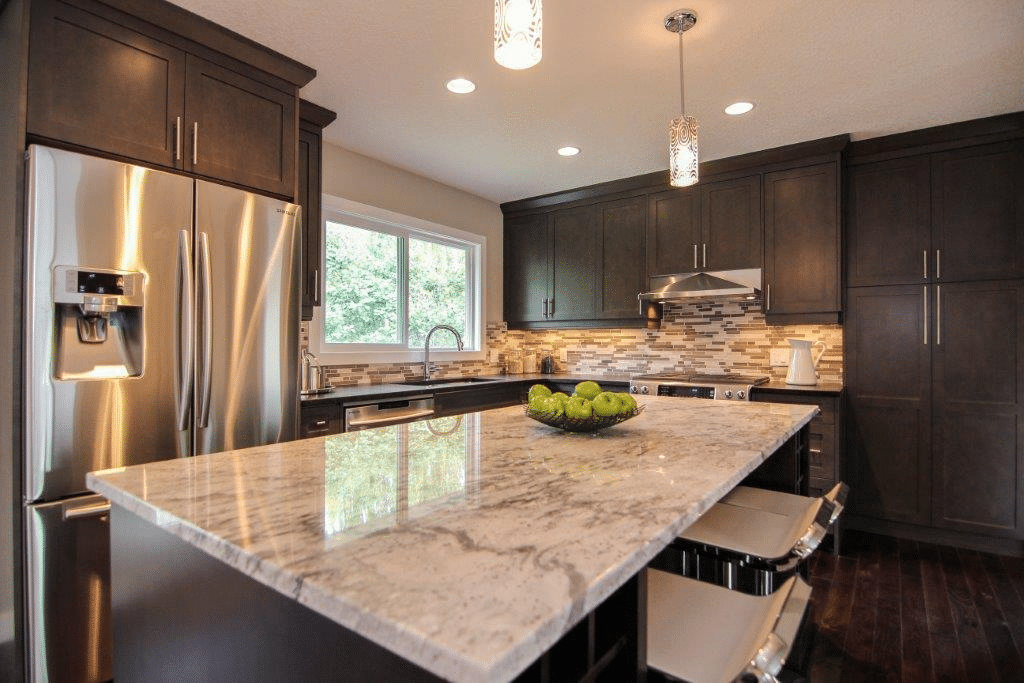
Kitchens are one of the best places for recessed lighting. A well-planned kitchen lighting design often includes recessed ceiling lights, under-cabinet lighting, pendant lights over an island, and sometimes accent lighting inside glass cabinets or open shelves.
Recessed lights can provide the general illumination needed for cooking, cleaning, and entertaining. However, they should not be the only light source. Under-cabinet lighting is important for countertop tasks, while pendants can add warmth and style.
Basements
Basements often have lower ceilings and limited natural light, making recessed lighting a practical choice. Since recessed lights do not hang down, they help preserve ceiling height and make the space feel more open.
For basement lighting renovations, recessed lights can be combined with wall sconces, LED strip lighting, or feature lighting to avoid a flat or overly bright look.
Bathrooms
Recessed lighting can work well in bathrooms, especially over showers, tubs, or general floor areas. However, vanity lighting is still important. A single recessed light above the sink can cast shadows on the face, making grooming tasks more difficult.
The best bathroom lighting renovations usually combine overhead recessed lights with wall-mounted vanity lighting.
Living Rooms
In living rooms, recessed lighting should be used carefully. It can provide soft general lighting or highlight a fireplace, built-ins, artwork, or architectural details. However, living rooms also benefit from lamps, sconces, and decorative fixtures that create warmth.
A living room with only recessed lighting may feel too plain or too bright unless dimmers and additional layers are included.
Hallways and Entryways
Recessed lights are useful in hallways and entryways because they provide even lighting without taking up visual space. They can make narrow areas feel brighter and more welcoming.
In entryways, recessed lighting can also be paired with a statement pendant or chandelier if the ceiling height allows.
Home Offices
A home office needs balanced lighting that supports focus without causing glare on screens. Recessed lighting can provide general brightness, while a desk lamp or task light can add focused illumination.
Dimmable recessed lights are especially useful in home offices because lighting needs may change throughout the day.
Recessed Lighting vs. Other Lighting Options
When planning lighting renovations, it is helpful to compare recessed lighting with other options.
Pendant lights are more decorative and work well over islands, dining tables, and stairwells. They add personality but may not provide enough general light on their own.
Flush-mount and semi-flush fixtures are easier to install in some cases and can add style, but they may not distribute light as evenly as a well-planned recessed layout.
Wall sconces add warmth and character, especially in hallways, bedrooms, bathrooms, and living rooms. They are excellent for layered lighting but may not be enough for full-room illumination.
Track lighting offers adjustability and can be useful in certain spaces, but it has a more visible appearance than recessed lighting.
LED strip lighting is excellent for under cabinets, toe kicks, coves, shelves, and accent details. It works best as a supporting layer rather than the main light source.
The right answer is often a combination. Recessed lighting may provide the foundation, while other fixtures add beauty, focus, and atmosphere.
Planning Recessed Lighting the Right Way
Successful recessed lighting begins with a plan. Before installation, consider how the room will be used, where furniture will sit, what areas need task lighting, and what features should be highlighted.
The lighting plan should also consider dimming zones. For example, kitchen work lights may be on one dimmer, island pendants on another, and accent lighting on a third. This allows the room to shift from bright and functional to warm and relaxed.
Spacing also matters. A common mistake is placing recessed lights only based on ceiling dimensions rather than real-life use. The layout should respond to the room, not just the grid.
Homeowners should also choose quality LED fixtures with good dimming performance. Not all LED lights work well with all dimmers. Poor compatibility can lead to flickering, buzzing, limited dimming range, or uneven performance. Choosing compatible components from the start helps avoid frustration later.
Should You Add Smart Lighting?
Smart lighting is becoming more common in lighting renovations. Smart dimmers, switches, and fixtures can allow homeowners to control lights from a phone, voice assistant, timer, or preset scene.
For example, a kitchen might have a bright “cooking” scene, a softer “dinner” scene, and a low “evening” scene. A basement media room might have one setting for games, another for movies, and another for cleaning.
Smart lighting can be very convenient, but it should be planned carefully. Homeowners should consider whether they want smart bulbs, smart switches, smart dimmers, or a more integrated system. In many renovations, smart dimmers are a practical option because they allow traditional-style control while adding modern functionality.
Is Recessed Lighting Worth It?
For many homeowners, recessed lighting is worth it when it is designed and installed properly. It can modernize a room, improve brightness, support better function, and make a space feel more finished.
However, recessed lighting is not automatically the best solution for every room. It works best when it is used with purpose. Too many pot lights can make a space feel harsh, while too few can leave the room unevenly lit. The best results come from balancing recessed lighting with other fixtures and choosing the right trim, size, brightness, colour temperature, and controls.
If you are planning lighting renovations, recessed lighting should be considered as one tool in the overall design. It can be highly effective, but it should not replace thoughtful lighting design.
Final Thoughts
Lighting renovations are one of the most powerful ways to improve the comfort, appearance, and function of your home. Recessed lighting can be an excellent choice for many spaces because it is clean, flexible, space-saving, and compatible with modern LED technology.
At the same time, recessed lighting requires careful planning. Fixture placement, trim style, colour temperature, dimming, permits, wiring, and room design all affect the final result. When recessed lighting is overused or poorly placed, it can create glare, shadows, or a flat atmosphere. When it is planned properly, it can help transform a room.
The most successful lighting renovations use recessed lighting as part of a layered design. By combining recessed lights with pendants, sconces, lamps, under-cabinet lighting, accent lighting, and smart controls, homeowners can create rooms that are both practical and beautiful.
Whether you are renovating a kitchen, basement, bathroom, living room, or entire home, the right lighting plan can make a dramatic difference. The team at Lifestyle Renovations can help you determine where recessed lighting makes sense, what other lighting options should be included, and how to create a finished space that feels bright, comfortable, and customized to your home.
Related Posts
Kitchen Renovation Ideas on a Budget: Transform Your Space Without Breaking the Bank

Smart Budget Bathroom Renovation Ideas